7UP Did Not Rebrand a Soda It Rebranded a Bet
A reformulated, lime forward 7UP just hit shelves with new packaging, the first real change to the formula in decades. Touching the recipe is not a design decision, it is a statement about where a brand is willing to put its risk, and this one put it squarely in the flagship product.
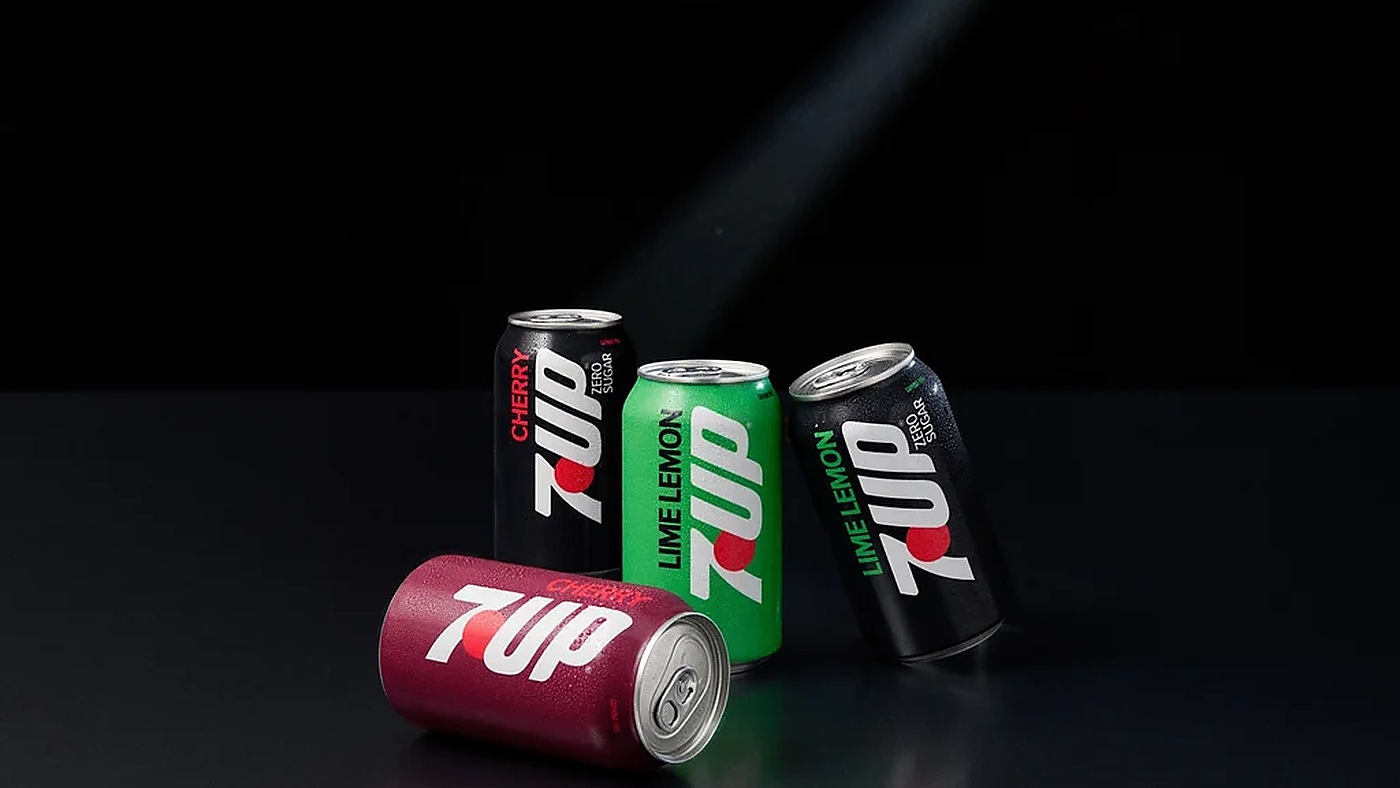
Most soda rebrands are surface work.
New can, same drink, new tagline, a campaign to explain the new can. What 7UP just did is a different category of decision, because it touched the one thing brands in this business almost never touch. The new version leans harder into lime, softens the lemon that has defined the drink since 1929, and arrives in packaging built to signal that the change is real rather than cosmetic. The packaging is the announcement. The formula is the bet.
Most rebrands move the package. This one moved the product.
The reason legacy soda brands protect the original recipe like a vault is that the recipe is the asset. Everything else, the logo, the can, the ad, is a wrapper around a taste memory the company spent a century installing in people. Changing the wrapper costs money. Changing the taste costs the memory.
So the bet 7UP is making is specific: that the audience it actually wants right now cares more about a distinct flavor identity than about a hundred years of consistency. That is a defensible read of where the category is going. Bolder, more specific flavor profiles have outperformed classic positioning across nearly every soda and sparkling water launch this year, and the shoppers driving that growth have no particular loyalty to how a lemon-lime soda tasted in 1998.
It is still a bet, and the tell is in the language. This is being framed as an evolution rather than a break, which is exactly how a brand talks when it is not yet sure how the loyalists will take it.
Where the risk actually sits
The useful comparison is not to a famous flop. It is to the category's more cautious players. Most legacy brands push all their risk into limited editions and spin-off flavors and keep the flagship untouchable. That structure exists for a reason: it lets you test appetite for change without betting the thing that pays the bills.
7UP did the opposite and moved the risk into the flagship. If the reformulation lands, it resets what the brand stands for going forward and buys a decade of relevance. If it does not, there is no classic version sitting safely on the shelf next to it to retreat to. The recovery path is a reversal, and reversals are expensive in both money and credibility.
That difference says something about how 7UP reads its own position. A brand with a commanding share of its category rarely touches the formula, because there is too much to lose and not enough to gain. A brand fighting for relevance against sharper, newer entrants is running a different calculation entirely, one where the slow loss is the likelier loss.
It is worth noticing what 7UP did not do, because the omissions are as deliberate as the change. There is no heritage edition announced alongside it. There is no limited run of the original formula to keep the loyalists quiet. Those are the standard hedges in this category, and skipping them is either confidence or commitment, and from outside the company those look identical.
The rollout is the whole gamble
What actually determines whether this works has very little to do with the lime and almost everything to do with distribution timing. A reformulation only pays off if the new product is what shoppers taste on their next purchase, not their fifth. Every week the old inventory sits on a shelf next to the new packaging is a week the brand is running an unplanned side-by-side test it did not design and cannot control.
7UP gets one real shot at first impressions here, and it is spending that shot in late summer, when soda sales peak and taste comparisons happen fastest. That is either the smartest part of the plan or the riskiest, depending entirely on how clean the shelf transition is.
Branding decisions this size rarely get a second rollout. This is the version of 7UP the market is going to judge, and the company knew that going in.
The other variable is the one nobody controls, which is what the loyalists do publicly in the first month. Formula changes generate a predictable wave of complaint that has very little to do with eventual sales, and the danger is not the complaint itself. The danger is a company reading that wave as a verdict and reversing before the actual buying data arrives.
The version of this that applies to you
The transferable question is not whether to rebrand. It is where in your business you are willing to put the risk. Most companies instinctively put it in the safest place, which is the marketing, and then wonder why the repositioning did not change anything. Moving the logo is a announcement. Moving the product is a position.
Before you touch either, be honest about which situation you are in. If you are winning, protect the core and experiment at the edges. If you are slowly losing, the edges will not save you, and the safest-looking option is usually the one that guarantees the slow loss continues.
7UP did not change a soda. It changed what happens if it is wrong.