Every New Miami Hotel Is Building a Club
Seia opens on the fifty fourth and fifty fifth floors of 830 Brickell this year, invitation only, above a restaurant of one hundred and seventy eight seats that anyone can book. Delano reopened in March with a club inside it. The table is no longer the product in Miami hospitality.
The most valuable room in Brickell is one you cannot book
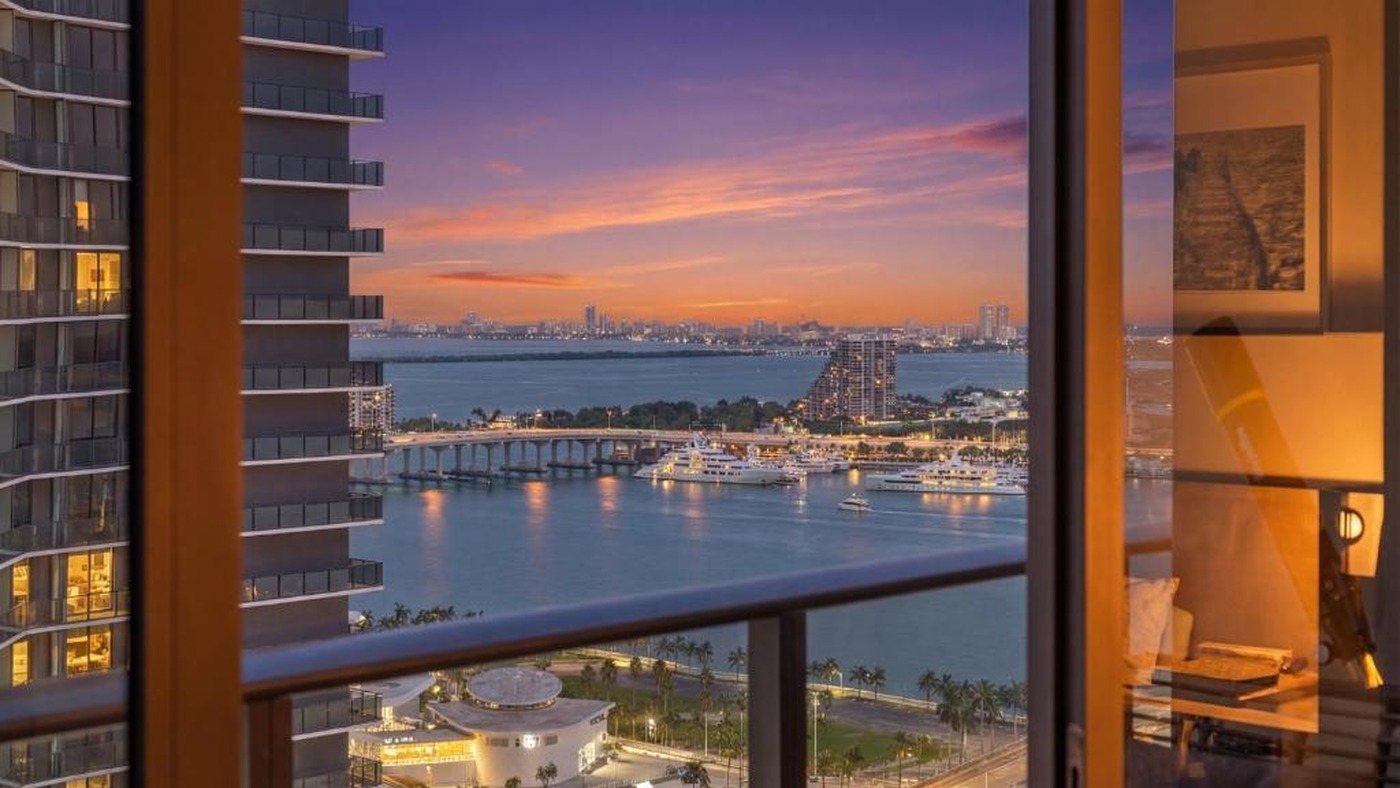
Seia opens this year on the fifty fourth and fifty fifth floors of 830 Brickell. Downstairs is an Italian restaurant of one hundred and seventy eight seats with a terrace running one hundred and eighty degrees over the city and Biscayne Bay, and anyone can try for a table. Above it, two floors, invitation only, same view, different door.
The operators are OKO Group and the Bastion Collection, whose kitchens include L'Atelier de Joel Robuchon and Le Jardinier. The building is the one where Thiel Capital signed at two hundred and fifty dollars a foot, a county record. The most expensive tower in Miami now has a floor at the top that money alone does not open.
What is being sold is not dinner. Members get priority on the restaurant below, private event space and a programme built around food, art and culture. That adds up to a standing relationship with a room, in a city where the constraint on a good evening has never been money and has always been access.
Miami hospitality spent twenty years competing on the table. The competition now is for the floor above it, and the economics of the two are not remotely the same.
The economics changed before the design did
A restaurant sells a night at a time. Revenue is a function of covers, covers are a function of season, and in this city the season is brutally uneven. A room can be impossible in February and empty in August while the operator carries the same rent through both. Even an excellent restaurant is a business with no memory, starting again every evening.
A membership sells a year. Dues arrive whether the member comes or not, they arrive in advance, and they arrive in a currency an operator can plan against. Initiation fees fund the build. A waiting list turns scarcity into an asset rather than a problem. The same square footage produces contracted revenue instead of volatile revenue.
That is the whole reason this is happening, and it is why the design followed rather than led. Operators did not develop a sudden taste for velvet rope. They found a revenue model that survives August, and the rope is what that model looks like from the street.
Delano Miami Beach reopened in late March after roughly one hundred million dollars of work, one hundred and seventy one rooms on Collins Avenue, with a members club built into the property. A hotel that size does not add a club for the dues. It adds one because a club gives the building a resident population that turns up in the months when the rooms do not fill.
The pipeline says this is the model now
Look at what is under construction and the pattern stops being anecdotal. Waldorf Astoria arrives on Collins Avenue in the winter of 2027 with three hundred and forty eight suites. Aman follows in 2027 in the Faena District with fifty six keys and twenty two residences, restoring the 1941 Versailles. Bvlgari opens in 2029 with one hundred rooms, mostly suites, inside a restored 1950s modernist building.
Fouquet's lands in the Design District in 2030 with eighty five rooms, one hundred and forty three condominiums and five dining concepts, in a David Chipperfield tower. Waldorf Astoria takes downtown in 2028, in one of the tallest buildings in the city.
Read those numbers again and notice what is small. Fifty six keys. Eighty five rooms. One hundred rooms. These are not volume hotels. They are small room counts attached to residences, clubs and restaurants, which means the rooms are no longer the business. The rooms are the show home for everything else the building sells.
That is a structural change in what a Miami hotel is for. The old model sold nights to strangers and measured itself on occupancy. The new one sells a relationship to a small number of people and measures itself on renewal. A hotel full of one time guests is now the weaker asset, because next year it has to find them all again.
What this means if you are not building a hotel
The transferable part is not the rope. It is that the most valuable thing most businesses own is a list of people who already chose them, and almost nobody charges for that relationship or structures it as one.
Every professional firm in this city has clients who would pay for standing access rather than transactional access. Every good restaurant has forty regulars who would take a membership tomorrow if one existed. Most are instead running an email list and hoping.
The caution is equally clear. Exclusion only creates value when the thing being excluded from is genuinely good, and Miami has a long history of businesses that bought the rope before they built the room. A members club with a mediocre kitchen is a mediocre kitchen with an annual fee, and the market finds that out in one season. Bastion is opening a club above a restaurant it already knows how to run. That order matters.
So look at your best customers and ask whether the relationship is priced as a relationship or as a series of transactions. Ask whether you have anything worth belonging to. Miami is answering that question in glass and elevation this year, and every one of those buildings is financed on the assumption that enough people will pay, annually and in advance, to be on the right floor.