Basquiat's Estate Just Entered the Beauty Space
MAC put out a six piece Basquiat collection in August, from a thirty dollar eye paint to a one hundred and twenty dollar brush set, and it landed ahead of a Netflix documentary nobody at MAC is making. That is not a collaboration. That is a release calendar being run by an estate.
MAC put out a six piece Basquiat collection in August, from a thirty dollar eye paint to a one hundred and twenty dollar brush set, and it landed ahead of a Netflix documentary nobody at MAC is making. That is not a collaboration. That is a release calendar being run by an estate.
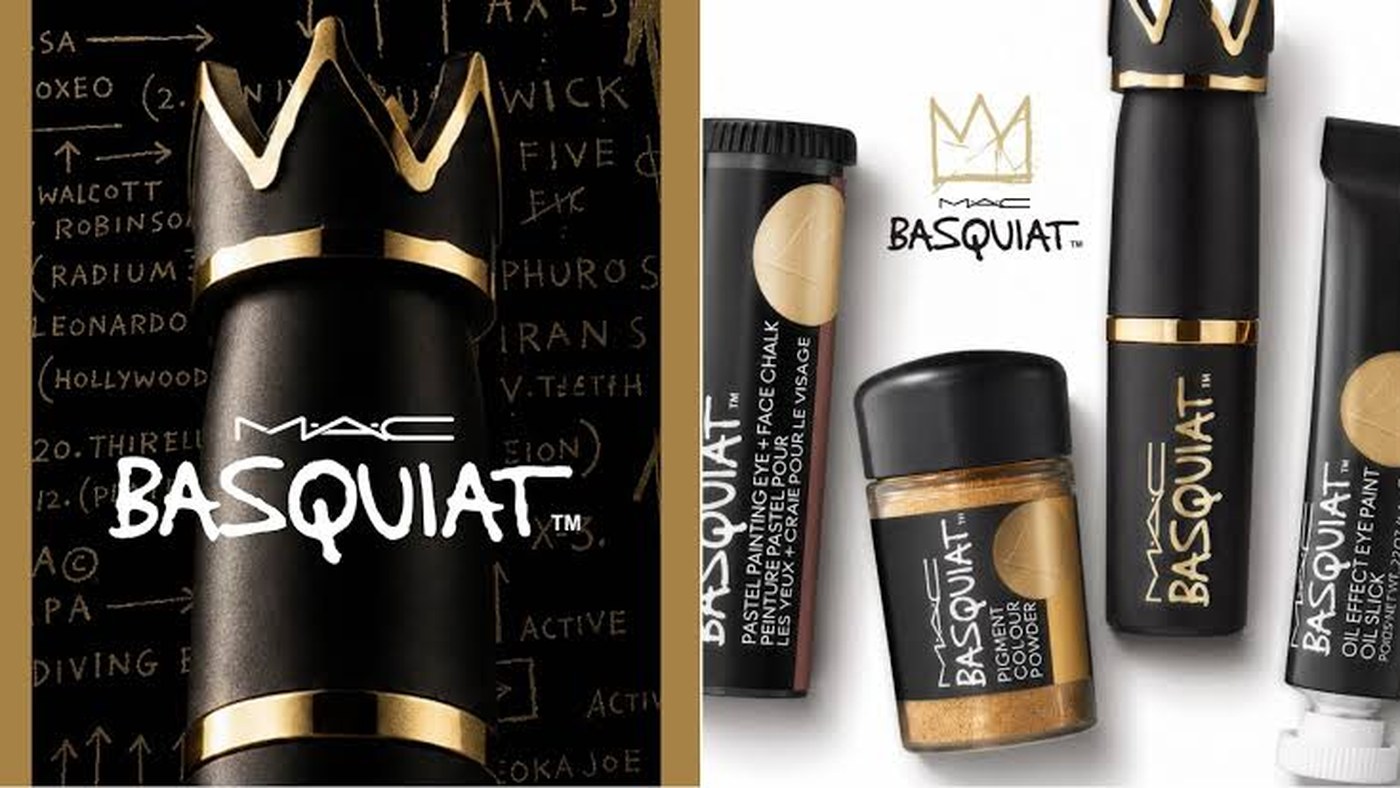
A Painter Who Died in 1988 Now Has a Price List
MAC launched its Basquiat collection on 7 August. Six pieces. MACximal Silky Matte Lipstick at thirty five dollars in Bowery Brown. Oil Effect Eye Paint at thirty in Oil Slick, Basquiat Blue and 1982. Pastel Painting Eye and Face Chalk at thirty in Royal Blueprint and Everlasting. A Pigment at twenty nine. The Basquiat Artist Brush Set at one hundred and twenty. The Famous Bag at fifty.
Read the range from the bottom up and it stops looking like a tribute. Twenty nine dollars gets somebody in. One hundred and twenty is for the person who already owns the reference. That is a ladder, not a homage, and it was built by a brand owned by Estée Lauder for a name that has been out of the studio for thirty eight years.
The Documentary Is the Real Headline
Here is the fact that makes this worth your attention. The collection shipped ahead of a Netflix documentary about Basquiat, called Jean Michel, that MAC had nothing to do with.
Sit with that. A beauty company timed a product launch to a film it does not own, does not fund and cannot control, because it could see the attention arriving on a date. When the documentary lands, a new audience will look Basquiat up. The searches will spike. The prices at auction will get quoted again. And a lipstick will already be on the shelf, already reviewed, already in the algorithm, waiting for a wave it did not have to pay to create.
That is the whole play and it is available to almost anyone. Most brands try to make the moment. The sharper ones find out when somebody else is making one and get there first. The cost difference between those two strategies is roughly everything.
The Estate Is an Operator, Not an Archive
None of it works without a rights holder sophisticated enough to say yes to this and no to the fifty other approaches that came in the same year. Basquiat rose out of New York graffiti, was famous before he could drive a car in most states, and died at twenty seven in 1988. He painted for about eight years. The estate has been trading for thirty eight.
Look at what the collection does not do. It does not print a canvas onto a compact and call it a collaboration. It takes the color, the mark and the vocabulary and rebuilds them inside a category with its own rules about wear, price and repeat purchase. That is product development with a dead founder, and somebody on the rights side had to be fluent enough in beauty to approve it.
The difference matters because it decides who is in charge. A rented signature makes the brand the author and the artist the decoration, and it ends when the season ends. A category entry leaves behind a proven price, a proven buyer and a proven format, so the next partner has to beat it rather than invent it. One of those is a fee. The other is a business.
Miami Is Where the Number Was Agreed
The market that makes any of this possible was not built in New York. It was built here, every December, for twenty years, in rooms the rest of the calendar calls hotels.
Art week is not a party with paintings. It is the machine that converts cultural worth into a number other people will honour, in public, repeatedly, until the number stops being an opinion. Collectors met dealers here. Prices were set here. A generation of buyers learned the name before they ever saw the work. By the time an auction record makes the news the market has already been made, and Miami made more of it than anywhere outside a saleroom.
Which is why the local version of this trade keeps getting undersold. Every year a run of companies buys visibility during art week and measures it in impressions, then wonders why nothing carried into February. The galleries are not selling impressions. They are selling into the one room that has spent two decades learning how to agree what something is worth, and agreement of that kind is the rarest thing a brand can buy.
The obvious read is that a beauty company found a good collaboration. The useful read is that anyone sitting on a body of work is sitting on a distribution problem, not a creative one.
Musicians worked it out first and sold their masters. Photographers are working it out now. An archive is inventory, and the only question is whether it is being operated by someone who understands the category it is walking into. The estates doing well are not the ones with the most famous names. They are the ones that said no often enough to keep the name worth something.
Run the test on your own business this week. Take the thing you have already made and ask whether it could carry a second category without embarrassing you. If yes, you have a brand. If no, you have a product, and a product has to be made again every single time you want money.
Basquiat stopped working in 1988. The market did not, because people kept building rooms for it to be priced in, and a lipstick called 1982 is the receipt.