Miami Book Fair Brings 500 Authors Downtown
The 43rd Miami Book Fair opens on Sunday at Miami Dade College's Wolfson Campus, with nearly 500 authors speaking in English, Spanish and Haitian Creole. For eight full days, downtown Miami becomes one of the country's great literary stages, and the way the fair builds an audience holds lessons for any brand.
The 43rd Miami Book Fair opens on Sunday at Miami Dade College's Wolfson Campus, with nearly 500 authors speaking in English, Spanish and Haitian Creole. For eight full days, downtown Miami becomes one of the country's great literary stages, and the way the fair builds an audience holds lessons for any brand.
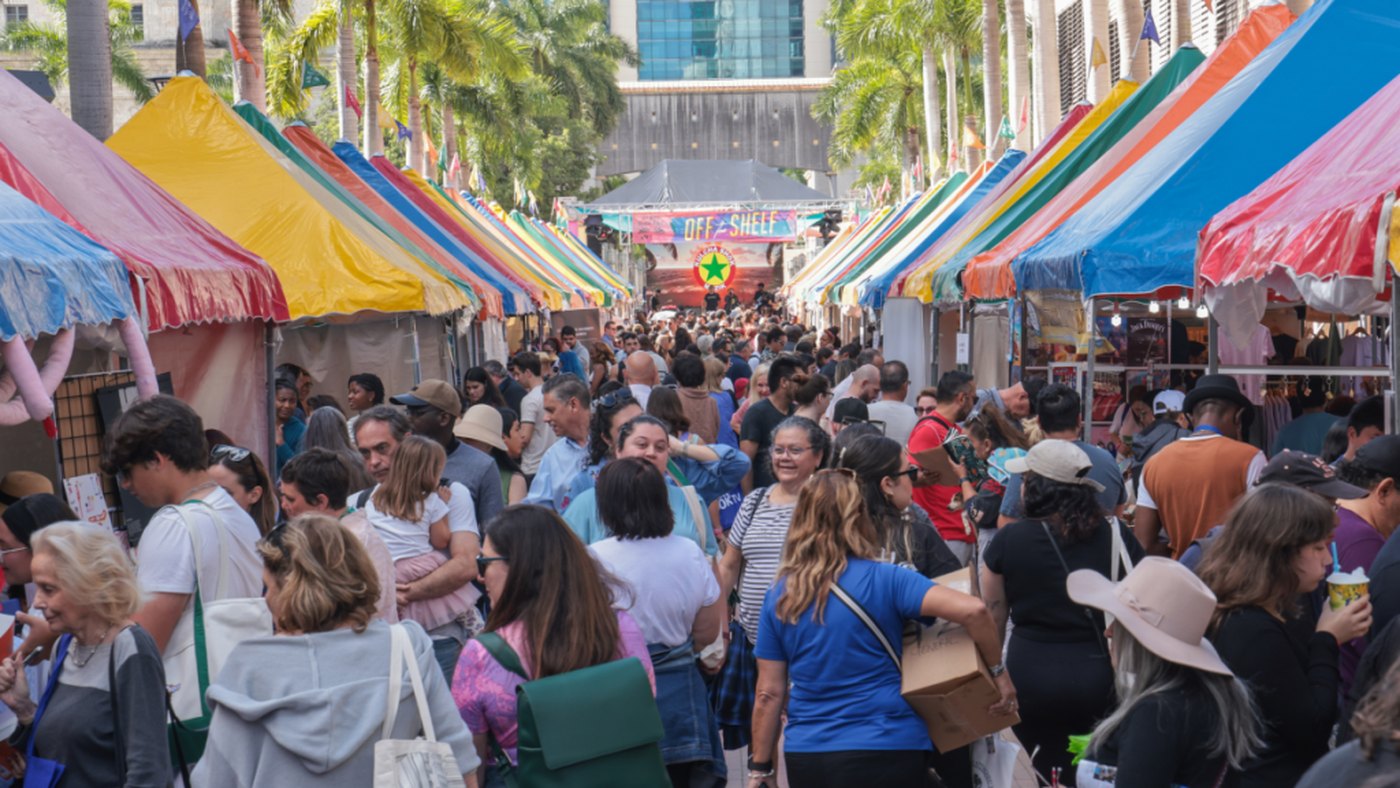
For eight days, one of the country's oldest book festivals turns a college campus into a city of readers
The Miami Book Fair returns for its 43rd year from November 15 to 22, centered on Miami Dade College's Wolfson Campus downtown. Nearly 500 authors are scheduled to appear, including winners of the Pulitzer Prize and the Booker Prize, four newly named finalists for the National Book Award and the Poet Laureate of the United States, Arthur Sze.
The week begins with the Evenings With series, which runs from November 15 to 20 and brings major names to the stage each night. Colson Whitehead will discuss his new book, Cool Machine. The actor Tony Shalhoub will appear with Josie Adams, and Bonnie Garmus, the author of Lessons in Chemistry, will present Peck and Peck.
Tickets for the Evenings With series are sold separately, while much of the weekend Street Fair is free or modestly priced, which keeps the door open to families who might never pay for a literary event. That balance between headline programs and open access is a large part of why the fair draws such a wide crowd every year.
On November 21, Margaret Atwood will share the stage with the debut author Jess Gibson, a pairing that puts one of the most celebrated writers alive next to someone at the very start of a career. The fair closes on November 22 with an evening marking 50 years of Anne Rice's Interview with the Vampire, featuring her son Christopher Rice and recorded live for the Dinner Partners podcast.
A Fair Built For Everyone
The heart of the week for many families is the Street Fair, which fills the streets around the campus from November 20 to 22 with publishers, booksellers, food and live programming. It is the part of the fair that turns casual visitors into regulars, and for many young readers it is the first time they meet an author in person.
Programming runs in English, Spanish and Haitian Creole, which reflects the community the fair serves rather than a single idea of who reads. The four National Book Award finalists on this year's program, Edwidge Danticat, Hannah Lillith Assadi, Camonghne Felix and Joseph Osmundson, write from very different backgrounds, and the fair presents them side by side.
The fair also works year round. Miami Dade College runs readings, writing workshops and school programs through the rest of the calendar, so the November festival is the high point of a longer relationship rather than a single event. Readers who discover an author in the fall often return for a workshop in the spring, and the community grows with every season.
Even the poster tells a story about who the fair belongs to. This year's design, called Foundation of Learning, was created by Isabella Isaza, a student at the New World School of the Arts. Choosing a young local artist for the most visible image of the year is a small decision that says a great deal about the event's priorities.
How A Book Fair Became An Institution
The fair was founded in 1984 by Miami Dade College and a group of partners, at a time when few people thought of the city as a literary destination. Four decades later it is one of the largest and most respected book festivals in the country, and it has helped change how the city sees itself.
It did not get there with a single big moment. It got there by returning every November, by mixing famous names with new voices and by keeping the doors open to the whole community. Each year built on the last, and the trust it earned from readers, authors and publishers became its most valuable asset.
That consistency is easy to underestimate. Many events launch with excitement and fade within a few years because they chase attention instead of building a habit. The Book Fair built a habit, and now the attention comes to it.
What It Means For Brands
The first lesson is that showing up every year compounds. A brand that hosts the same event, publishes the same series or supports the same cause year after year builds recognition that no single campaign can buy. The real value is in the repetition.
The second is to pair the famous with the new. The fair gives debut authors a stage next to legends, which keeps the program fresh and gives audiences a reason to discover someone they had never heard of. Brands can do the same by featuring emerging partners, local makers or new voices alongside the names people already know.
The third is to speak the language of the people you serve, literally and otherwise. Programming in three languages tells every visitor that they belong. A business that reflects its real audience in how it speaks, hires and presents itself earns a loyalty that generic messaging alone never will, however polished.
For eight days the fair will fill downtown with readers, writers, families and conversation that spills onto every corner. It has spent more than four decades earning that crowd, one November at a time, and it remains one of the best examples anywhere of how patience turns an event into an institution.
Privacy Preference Center
When you visit a website, it may store or retrieve information in your browser, usually in the form of cookies. This site keeps that to a minimum: we use only the technologies needed for it to work properly, and we do not use advertising, analytics or tracking cookies. You can learn more in our Cookie Notice.
Thank you. You are on the list.