Miami Has Ninety Days Before the G20
The G20 lands at Trump National Doral on December 14 and 15, bringing nineteen member nations, the African Union, the European Union and thirteen invited countries into a city that will be closed, watched and filmed for a week. Ninety days out, most Miami businesses have no plan for it.
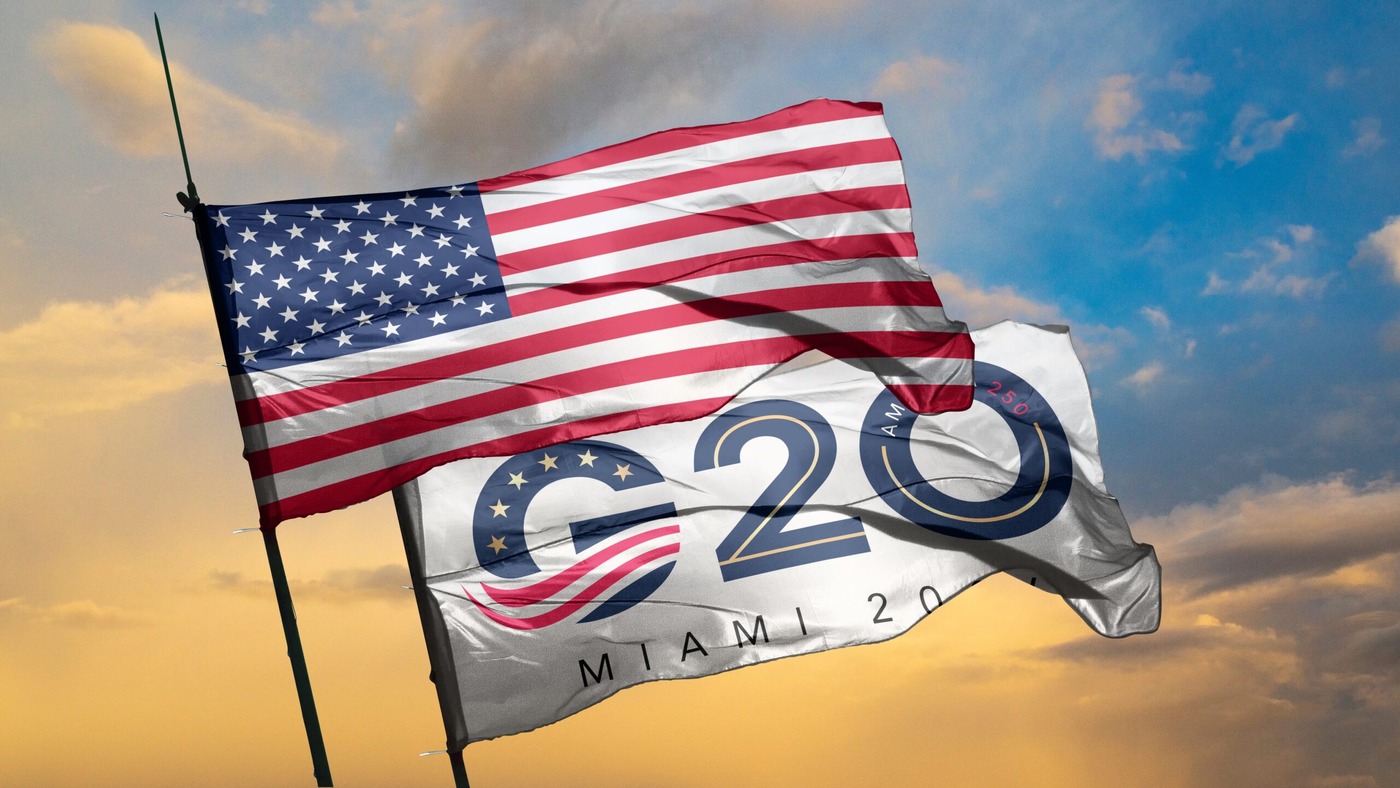
The summit is ninety days out and it is not a tourism event
The G20 arrives at Trump National Doral on December 14 and 15. Nineteen member nations, the African Union and the European Union, plus thirteen invited countries including Ireland, Norway, Poland, Qatar, Singapore, Spain and the United Arab Emirates. Miami Mayor Francis Suarez announced the location from the Oval Office and Doral Mayor Christi Fraga confirmed it.
Most businesses in this county are treating it the way they treat a boat show, which is to say they are not treating it at all. That is the mistake worth correcting now, because a leaders summit is not a visitor event. It is a security event that happens to be televised.
The distinction matters commercially. A visitor event brings people who spend money in your shop. A security event brings a perimeter, a motorcade schedule and several thousand credentialled people who never leave a controlled corridor. The footprint is real but narrow, and it is surrounded by a wider ring of businesses who lose ordinary trade for the privilege of being nearby.
Miami has hosted large things before. It has not hosted this. Whether the week is worth anything depends on decisions a city makes in advance, and there are ninety days left to make them.
What closes, and what that costs
Doral sits directly west of the airport, wrapped by the Palmetto and fed by the Dolphin. Those are not decorative roads. They are how freight and staff move between the airport, the western suburbs and the core. A perimeter in Doral does not stay in Doral, because the closures that protect it sit on the arteries everyone else uses.
Plan for a working week of disruption rather than two days of it. Advance teams arrive early, sweeps happen before the principals do, and restrictions lift slowly. Anyone who depends on a delivery window or a same day courier should be looking at the week of December 14 now, not in December.
Hotels are the clearest winners and the least free. Delegation and press blocks take inventory out of the market at rates negotiated centrally, which lifts the average and removes the flexibility. Restaurants and retail inside the ring should assume walk in traffic disappears. Those outside it should assume the opposite and staff accordingly.
There is also a calendar collision worth naming. December is already the heaviest month in the Miami year. Art Week fills the first half, high season opens behind it, and the airport runs at capacity into the holidays. The summit lands on a month with no slack in it, which is the difference between an inconvenience and a real operational problem.
The cities that profited decided in advance
Every host city ends up with the same asset, a week of unavoidable global coverage, and the same question, which is what that coverage is supposed to say. The cities that got value from it answered before the cameras arrived. The ones that did not got aerial footage of a skyline and nothing that outlasted the news cycle.
Miami has three available stories and no stated preference between them. It can be a finance capital, which is the version Brickell has been building toward for a decade. It can be the gateway to Latin America, which is the version the region's banks and law firms already act on. Or it can be a resort city with a conference attached, which requires no effort and is therefore the default.
The default is a downgrade. A city that spent fifteen years persuading capital it is a place to run a business does not benefit from a week of footage framing it as a place to play golf. That framing is half written by the venue, and correcting it means putting an alternative in front of several thousand journalists who will otherwise use whatever is nearest.
This is ordinary brand work and it is not expensive relative to what is at stake. Decide the claim, assemble the proof, make both easy to reach for people working on deadline in an unfamiliar city. If the official framing arrives late or generic, the companies that prepared their own will still be the ones quoted.
A ninety day plan for people who are not hosting it
Start with geography. Find out whether you sit inside a plausible perimeter, which for planning means Doral and the corridors linking it to the airport. If you do, your December problem is operational. If you do not, it is a demand problem, and those need different answers.
Move what you can move. Deliveries, installs and inspections should be out of that week. The cost of moving them now is a phone call. The cost of moving them on December 12 is whatever the market charges for panic.
Do not launch anything. A product, a campaign or a store opening placed in that week is competing with a leaders summit for the same local press, and it will lose. Move it to early December or mid January and get more coverage for the same spend. Brief your staff on the closures before the week arrives, not on the morning.
Then, if you have a legitimate claim on the story, prepare to make it. A spokesperson who can speak to the Latin American relationship in plain language, a page a journalist can find in ten seconds, a photograph that is not a stock skyline. The coverage is coming to Miami either way. The only question is whether your business is in it.