South Miami's Old Mall Is Getting 1,513 Homes
South Miami's Shops at Sunset Place opened in 1999 as somewhere to go, and it is coming down to become somewhere to live, with seven towers, 1,513 homes, a hotel and a cinema. The shops survive, but only as the busy ground floor of a place people come home to every single night.
South Miami's Shops at Sunset Place opened in 1999 as somewhere to go, and it is coming down to become somewhere to live, with seven towers, 1,513 homes, a hotel and a cinema. The shops survive, but only as the busy ground floor of a place people come home to every single night.
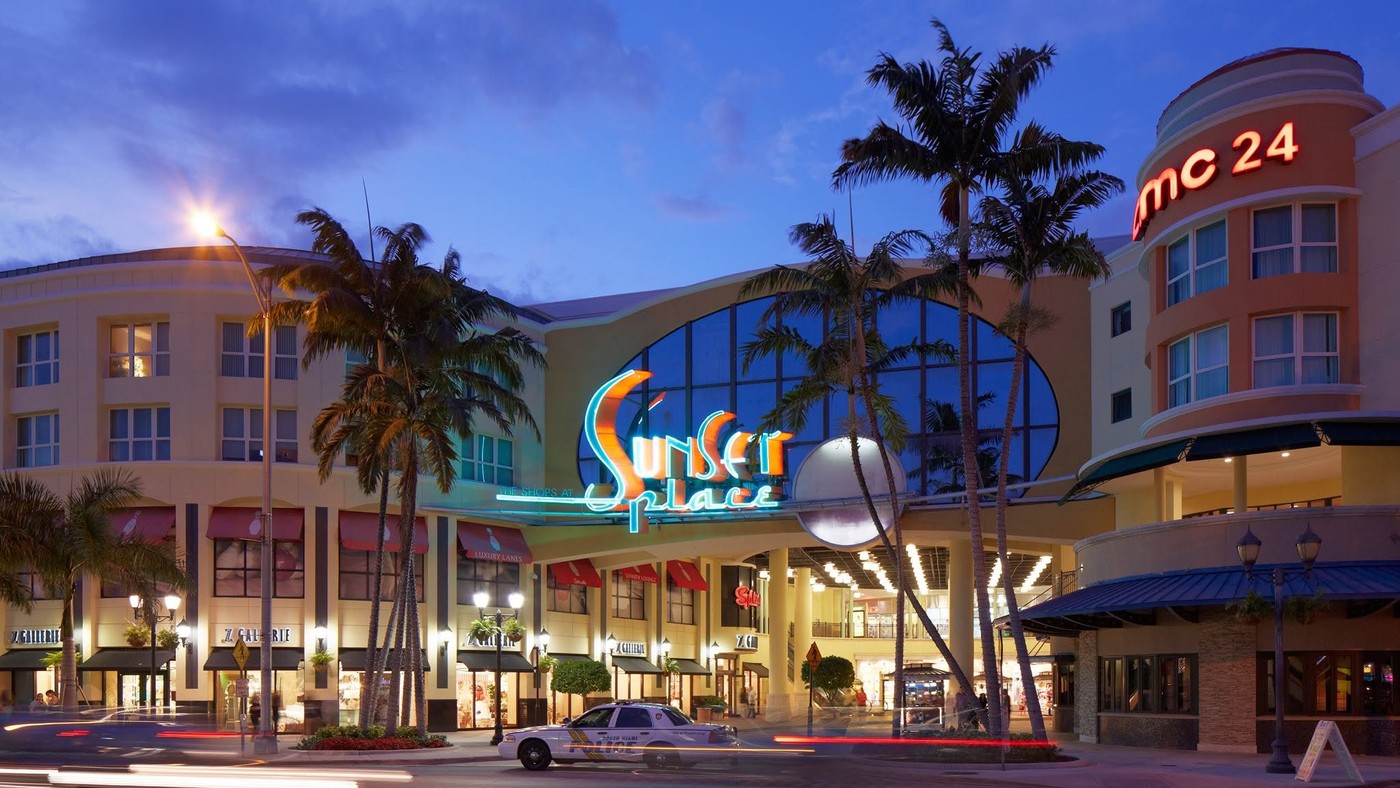
A mall that was built to be visited is about to be rebuilt to be lived in
For most of this year the Shops at Sunset Place has looked the same as it did last year, which is to say mostly empty. The open air mall at Sunset Drive and Red Road opened in 1999, and in its first years it was one of the busiest places in South Miami, with an IMAX screen, a Virgin Megastore and crowds of students from the University of Miami across the road. By the late 2010s the stores were leaving faster than they could be replaced.
This week Miami Today reported that the mall is close to demolition, and what replaces it says more about where retail is going than any sales report this quarter. The site is not being turned into a better mall. It is being turned into a neighborhood that happens to have shops in it.
What Is Going Up in Its Place
Midtown Development bought the ten acre site in late 2020 for 65.5 million dollars. In October 2024 the South Miami City Commission voted unanimously for a plan designed by Heatherwick Studio of London: seven towers between 12 and 33 stories, 1,513 residences, a 287 room hotel, a 1,300 seat cinema, more than 50,000 square feet of workspace and close to 150,000 square feet of shops and restaurants, all laid out on a new grid of walkable streets.
The city attached conditions that read like a business plan. The developer has to build the sidewalks and infrastructure before anyone moves in, and the project has to reach 300 million dollars in property value by 2034. Miss that and the bonus height drops from 33 stories to 17. The first phase, with the streets, a condominium and the hotel, is aimed at 2029.
The timeline has already slipped once. Demolition was meant to start in the first quarter of this year, and it waited on Miami-Dade County to approve a special taxing district to pay for roughly 150 million dollars of new water, sewer and pump station capacity. That is the unglamorous truth of every project like this one. The towers are the picture, but the pipes decide the date.
The Store Is Now an Amenity
Sunset Place did not fail because people stopped shopping. It failed because shopping stopped being a reason to drive somewhere. A mall is built around the idea that customers arrive by car, park, walk a loop and leave. Online ordering removed the first reason to come, and newer centers nearby removed the second. What was left was a large building that depended entirely on visitors.
The new plan flips that dependence. With 1,513 households above and around the ground floor, the shops no longer need to persuade anyone to make a trip. Their customers are already there in the morning for coffee, at lunch for something quick and in the evening for dinner, a haircut or a film. Retail stops being the destination and becomes the amenity, the same way a pool or a gym is an amenity, something that makes the address worth paying for.
That changes who can afford to be there. A store that needed a regional crowd to survive will struggle. A bakery, a pharmacy, a small grocer, a dry cleaner, a clinic or a good neighborhood restaurant can do very well, because their best customers walk past the door twice a day. The rents will be set by how much residents value having those things downstairs, not by how many cars the parking garage can hold.
The businesses already on Sunset Drive seem to understand this. Deli Lane and Sunset Tavern, both open since 1988 and both inside the demolition footprint, are relocating about a block west rather than closing. Bored Cuban opened its third location on the same stretch in March, and PopUp Bagels is due this fall.
What It Means for Anyone Selling in South Florida
Sunset Place is the third landmark to stand on this corner. Before the mall there was the Bakery Center, a 35 million dollar mixed use project from 1982, and before that the Holsum Bakery. Each one was built for the way people spent money at the time. The next one is built for a simple fact: the most reliable customer is the one who lives within walking distance.
For a business owner the useful question is no longer how to bring people to a location. It is where people are about to live, and what they will need every day once they get there. Thousands of new residences are coming to South Miami, Coral Gables, Brickell and Edgewater over the next five years, and most of them will have ground floors that need tenants who can earn their rent from neighbors.
There is a risk in all of this, and it is timing. A ground floor built before the residents arrive can sit half empty for years, and a project that depends on a taxing district, a construction loan and a sales target can stall at any of those steps. The safest retail plan is the one that opens when the households do, not before.
The mall that drew a crowd from all over the county will not be missed by many of the people who stopped going. What replaces it will be judged by something much more ordinary, which is whether the people who live there can get most of what they need without getting in a car. That is now the measure that matters.