Wynwood Gets 500 Guitars and a Stage
Gibson Garage Miami opens September 10 on the ground floor of the Wynwood Garage with eight thousand square feet, more than five hundred instruments, a live performance stage and the first Gibson Gallery in the United States, which makes it a venue that happens to sell guitars.
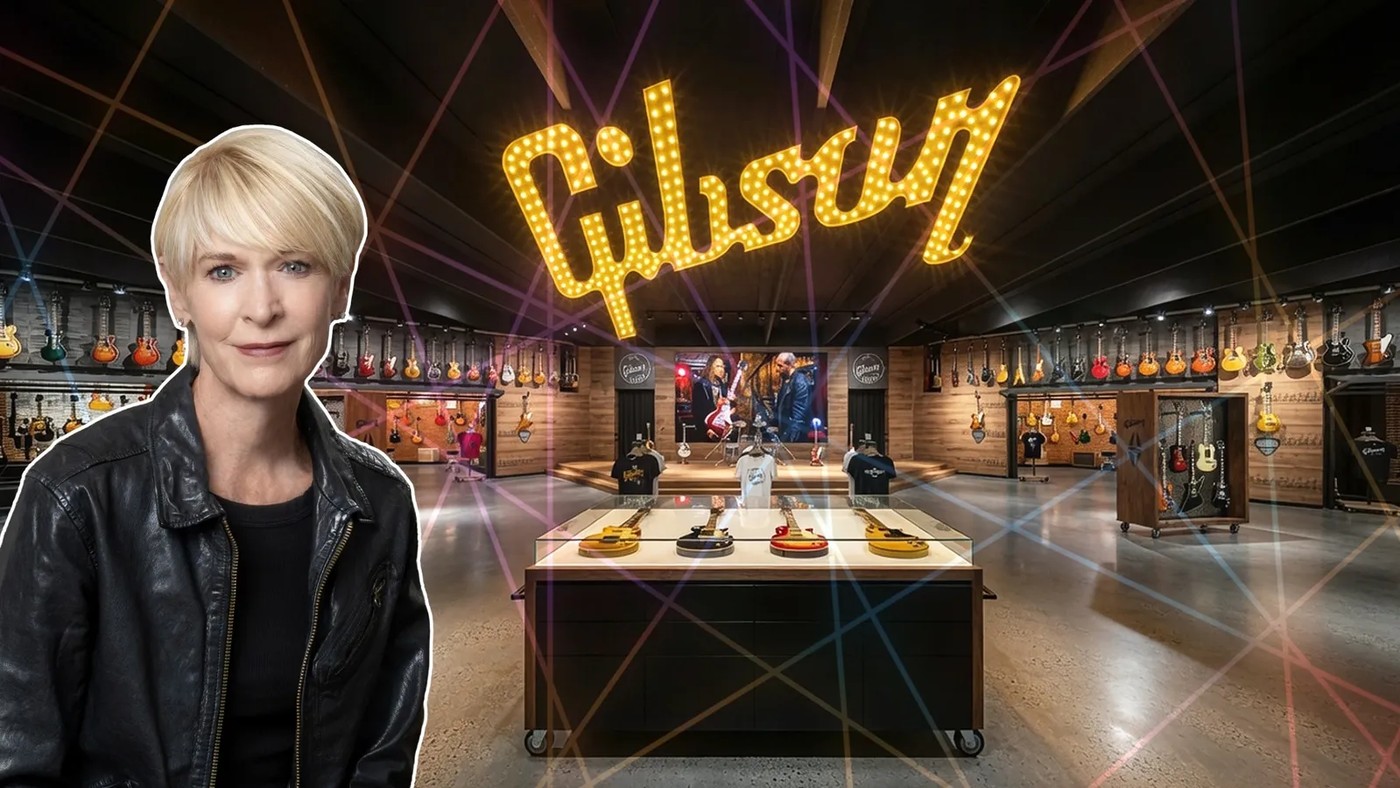
Gibson did not open a store in Wynwood it opened a room that holds a crowd
Gibson Garage Miami opens to the public on September 10 at 2660 NW 3rd Avenue, on the ground floor of the Wynwood Garage, in space leased from Goldman Properties. It is the brand's third Garage after Nashville and London and the first anywhere to carry a Gibson Gallery, an art installation of music history photography. The room runs eight thousand square feet and holds more than five hundred instruments across Gibson, Epiphone, Kramer, MESA/Boogie, Maestro and KRK, with a Custom Made to Measure service for people commissioning their own. It was built around a live performance stage.
Read the description again and notice what is missing. There is no aisle count, no square footage of selling floor, no mention of assortment depth as the headline. The headline is the stage.
The choice of Miami is worth sitting with as well. Gibson is a Nashville company and its first two Garages went to Nashville and London, which are music cities in the traditional sense. Miami is a music city in a different sense, built on Latin music, on touring, on production and on an audience that consumes across languages. Putting the first United States Gallery here is a statement about where the audience is now.
Retail with a stage is a different business
A store is measured on sales per square foot. A venue is measured on how often people come back and how long they stay. Those two metrics push a space in opposite directions, and almost every retailer resolves the tension in favor of the first.
There is a detail in the build that gives the intent away. A moving conveyor belt runs through the space as a display, a nod to Gibson's own finishing process. Nobody installs a conveyor belt to sell more units per square foot. It is there because it is worth looking at, and a room people look at is a room people stay in.
Gibson resolved it the other way. Five hundred guitars in eight thousand square feet is not a dense merchandising plan. It is a display density that leaves room for people to stand, and standing room is what a stage requires.
The bet underneath it is that a guitar is not really bought in a store. It is bought after months of wanting one, and the wanting is produced by watching someone play. A room where people play sits upstream of the transaction, and the transaction can happen anywhere, including online later that night. Gibson is not trying to capture the sale in the room. It is trying to produce the desire in the room and let the sale happen wherever it happens.
There is also a distribution argument hiding in the building. A stage produces content by existing. Every set played in that room is footage, and footage is what actually travels. A store generates no media. A venue generates it continuously, at no incremental cost, from the thing it was already going to do.
This publication has made the point before. Attention is expensive, experience is what converts. Fanatics Fest turned an audience into the product by making the fans the event. Gibson is running the same play in a permanent space instead of a weekend.
Wynwood was already the audience
The location is not incidental. Wynwood is a neighborhood people walk through with no specific errand, which is exactly the traffic pattern a venue wants and exactly the one a destination store cannot rely on. Nobody drives to a guitar store on a Saturday afternoon. Plenty of people wander into a room with music coming out of it.
The neighborhood also solves the hardest problem in experiential retail, which is the second visit. A space that requires a dedicated trip gets one visit per customer per year. A space embedded in a district people already circulate through gets casual repeat traffic for free, and repeat traffic is what turns a room into a habit.
The lesson for anyone with a lease
The measurement problem is real and worth acknowledging. A room like this will look inefficient on any traditional retail report, because the sales it produces mostly close somewhere else and later. Businesses that build these spaces and then judge them on same store metrics tend to close them within two years. The metric has to change at the same time as the room.
Most retail businesses cannot build a performance stage, and that is not the transferable part. The transferable part is the question Gibson answered. What happens in this room that cannot happen on a phone.
If the answer is you can see the product in person, the room is a showroom and the internet will eventually win. If the answer is something happens here that people want to be present for, the room is a venue and the internet cannot copy it.
That question does not require a music brand or eight thousand square feet. A restaurant answers it with a chef's counter. A retailer answers it with a class, a repair bench, a fitting, a standing weekly event. What it requires is giving up floor space that could have held inventory, which is the actual cost and the reason most businesses do not do it.
Gibson gave up the floor space. On September 10 Wynwood finds out what it bought.